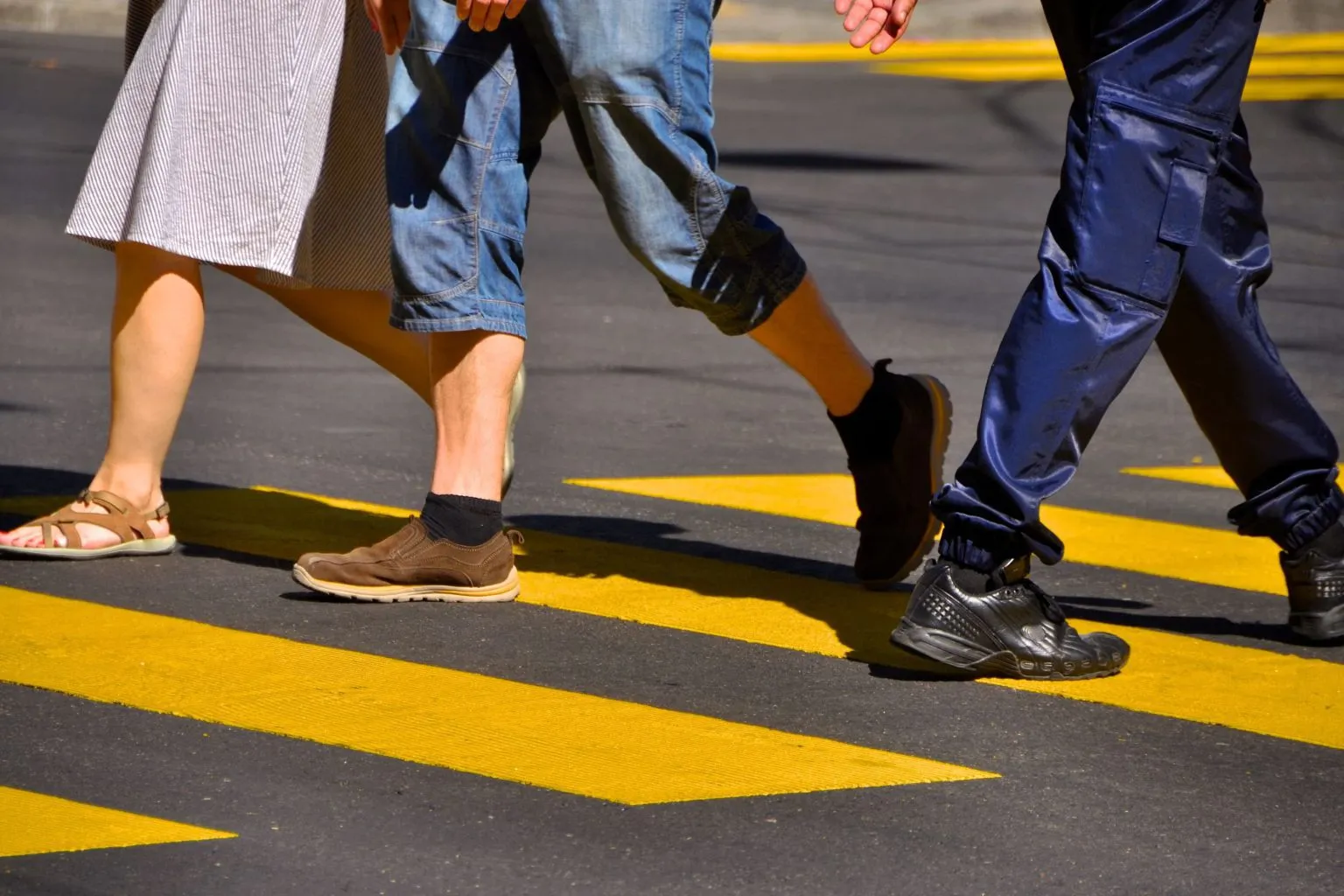
Pedestrian right-of-way laws give walkers important protections, but they do not create an unlimited right to enter traffic whenever they choose. Drivers and pedestrians both have legal responsibilities, and the exact rules governing crosswalks, signals, midblock crossings, and sidewalks are primarily established by state and local law.
Crosswalks Create Major Driver Duties
NHTSA advises drivers to yield to pedestrians in crosswalks, stop far enough back for other motorists to see people crossing, and never pass a vehicle that has stopped at a crosswalk.
State law supplies the enforceable details. North Carolina, for example, requires drivers to yield to pedestrians in marked crosswalks and certain unmarked crosswalks when traffic signals are not controlling the movement.
Anyone reading general pedestrian rule context should therefore verify the statute for the state where the event occurs.
NHTSA pedestrian safety guidance
Pedestrians Also Have Legal Duties
Right of way is not the same as freedom from traffic rules. Pedestrians may need to obey WALK and DON’T WALK signals, use designated crossings in certain areas, and yield when crossing outside a protected location.
For example, North Carolina law requires a pedestrian crossing outside a marked crosswalk or an unmarked intersection crosswalk to yield to roadway traffic in specified circumstances. It also restricts certain crossings between signal-controlled intersections.
Broader crosswalk law discussions can help explain terminology, but the controlling statute determines the duty.
Drivers Must Remain Careful Even When They Have Priority
A driver’s legal priority does not create permission to ignore an obvious danger. Motorists still have duties concerning reasonable lookout, speed, turning movements, and avoiding collisions.
NHTSA recommends slowing down, preparing to stop before entering crosswalks, exercising extra caution when backing, and watching carefully in poor visibility.
In a serious crash, these issues can become part of pedestrian injury liability because a citation and a civil negligence claim involve related but distinct questions.
| Situation | Pedestrian Duty | Driver Duty |
|---|---|---|
| WALK signal | Cross in permitted direction | Yield as required |
| Marked crosswalk | Enter with reasonable care | Yield under applicable law |
| Midblock crossing | Follow local crossing rules | Maintain proper lookout |
| Driveway or parking exit | Watch approaching vehicles | Watch sidewalk traffic |
The Biggest Right-of-Way Misconception
Saying “pedestrians always have the right of way” is too broad. The rule depends on location, traffic controls, how the pedestrian entered the roadway, and the state’s statute.
The opposite claim is also misleading. A driver cannot assume a pedestrian outside a crosswalk may simply be ignored. Safe-driving duties may still apply, and a driver may face legal consequences if careless conduct contributes to a collision.
When Is Legal Help Worth Considering?
Legal advice may be useful after a pedestrian injury, disputed crosswalk collision, hit-and-run event, serious traffic citation, or insurance disagreement.
Evidence can disappear quickly. Video footage, witness information, traffic-signal timing, lighting conditions, vehicle data, and photographs may matter when determining what each person was required to do.
Frequently Asked Questions
Does a pedestrian always have the right of way in a crosswalk?
Not automatically in every circumstance. State law, traffic signals, the pedestrian’s movement, and the driver’s position all matter. Drivers should nevertheless be prepared to yield to pedestrians lawfully using crosswalks.
What is an unmarked crosswalk?
Some state laws recognize crosswalks at intersections even when painted lines are absent. The exact statutory definition varies, so local law should be checked before assuming no crosswalk exists.
Is jaywalking automatically illegal everywhere?
No single nationwide rule governs every midblock crossing. States and cities differ in how they regulate pedestrian crossings outside marked crosswalks and intersections.
Right of Way Works Best When Both Sides Know the Rule
Pedestrian law is built around shared responsibility rather than a blanket priority for either side. Drivers should approach crossings prepared to yield when required, while pedestrians should follow signals and crossing rules. After an accident, the actual state statute and local traffic controls matter more than common sayings about who “always” has priority.
This article provides general legal information and is not a substitute for advice from a qualified attorney.